
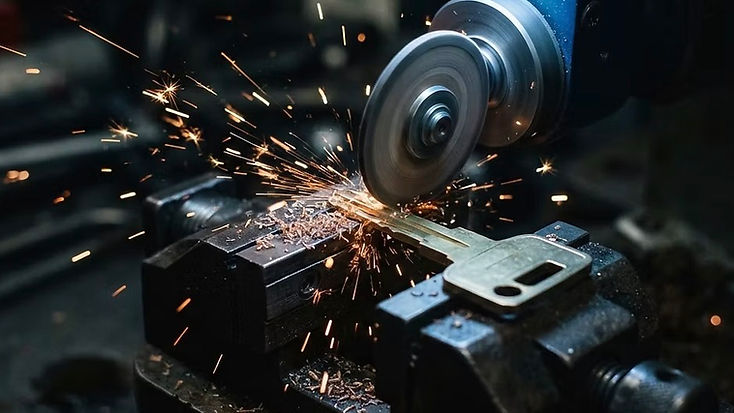
Thirty seconds of checking the bolt, the strike plate and the key tells you whether your deadbolt will hold up — or fail when you need it most.
A deadbolt that still turns is not the same as a deadbolt that still protects you. Here are three checks you can do at the door in under a minute.
1. The bolt should throw fully
Turn the key or thumb-turn and watch the bolt slide out. It should extend about an inch, smoothly and without wobbling. If it stops short or needs a nudge, the door has shifted or the strike plate is misaligned — a two-minute adjustment now saves a lockout later.
2. The strike plate should be screwed into more than the trim
A strike plate held by two short screws into soft wood gives way under a kick. You want at least one three-inch screw reaching the stud behind the frame.
3. The key should enter without wiggling
If you have to jiggle the key, the cylinder pins are worn. Worn pins also wear your keys, so a fresh cylinder plus new keys ends the cycle — cheaper than a forced entry repair.
If any of these fail, call (408) 432-4567 and we will quote the fix before we roll.