
Commercial Security
What to Do When You Are Locked Out of Your Business After Hours
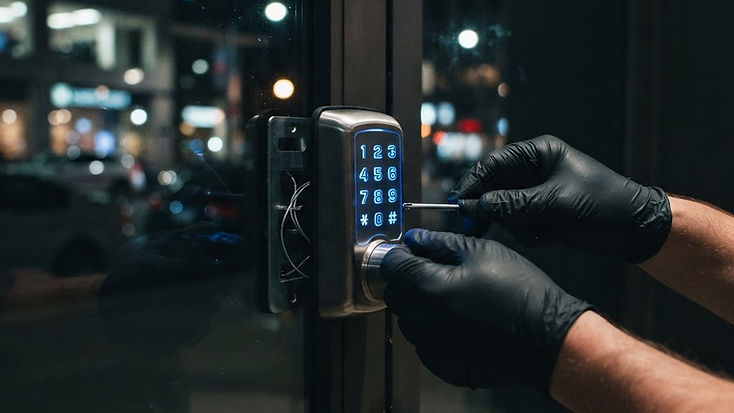
Storefronts and offices fail in their own particular ways: a dead latch, a broken panic bar, a key snapped in a mortise cylinder. The right first moves protect both the door and your insurance position.
Start with the door, not the lock
Before calling anyone, check whether the door is actually locked or simply binding. A swollen frame, a dropped threshold or a door that has slipped on its hinges can make an unlocked door feel locked. Lifting the handle or pushing the door up and in as you turn the key solves a surprising number of after-hours emergencies.
If you have a second entrance, test it. Loading docks, side doors and rear service entries are often on a different cylinder and may still work.
Call a locksmith who handles commercial hardware
Commercial doors are not residential doors. Storefront aluminium doors, mortise locks, rim panic devices and electric strikes need different tooling and parts. Tell dispatch the door type — glass storefront, solid core, roll-up — so the right unit and stock are sent.
Ask for the total price before the unit is dispatched, including any after-hours rate, and confirm the technician is licensed and carries commercial parts on the van.
Have these ready for the technician
Photo ID, proof you are authorised for the premises — a lease, a business licence, a utility bill in the company name — and a phone number for the owner or property manager if you are not the signatory.
If an alarm is armed, have the code and the monitoring company’s number ready. A locksmith opening a commercial door without the alarm handled turns a lockout into a false alarm call-out.
After the lockout: rekey, do not just reopen
If keys were lost rather than left inside, the door is still compromised once it opens. Rekeying the entry cylinders that night — or first thing the next morning — closes the exposure. Replacing the hardware is only necessary if the lock is damaged or under-spec for the premises.
Then fix the cause: a spare key in a managed lockbox, a keypad entry for opening staff, or a master-key system so the manager and one trusted opener each hold a unique key.
Commercial lockouts are best handled as a process, not a panic. One call to a mobile commercial locksmith gets the door open cleanly and the hardware back to a known-good state.